The PSI-Theory

The PSI-Theory offers reliable explanations and points us in the right direction.

The PSI-Theory

The PSI-Theory offers reliable explanations and points us in the right direction.

1983

Founded

1999

Practical Application

2021

20+ years of validation

Table of Contents

What is PSI?

PSI means Personality Systems Interaction.

The PSI-Theory was founded by Prof. Dr. Julius Kuhl as a meta-theory which integrates various valid results from experimental psychology (Kuhl, 2001) and was confirmed by the findings of modern neuropsychology.

PSI-introduces an additional function-analytical perspective (in addition to the personal, empathic one) that focuses on the functions and interactions of neuropsychic systems, regardless of the content of subjective experience.

Functional analysis means understanding how different personal systems interact with the affects and cognitive processes associated with them. From this understanding, additional creative ideas for a sustainable change and development process can be derived. These functions are even more important for the change process than disorder-oriented diagnoses, because development blockades or disorders can have a variety of functional causes.

Baumann et. al. (2017), offers a good overview of the different fields of application in “Why People Do the Things they Do: Building on Julius Kuhl`s Contribution to Motivation and Volition Psychology” Göttingen: Hogrefe. It deals with sports coaching, educational science, education, therapy, counselling and training and human resources management.

Excursus Personality Psychology

Ever since psychology has been a science, many approaches to personality psychology have developed, primarily from the field of psychotherapy. Very often a certain personality theory depicts a specific view of human beings, e.g. the behaviouristic, the cognitivistic, the psychoanalytical etc. These concepts include implicit values as well as assumptions about how development processes can be supported, how change processes take place and how an individual personality or personal differences develop.

Very often these conceptual human images contradict each other in their basic assumptions, so that they appear useless for the complexity of everyday life. Prof. Dr. Julius Kuhl (2001) developed a meta-theory of personality, which integrates many contradictory theories that are also compatible with modern neuropsychological findings as well as the findings of modern personality psychology and, last but not least, can be applied extremely well in a practical context. As Lewin (1935) remarked, nothing is more practical than a good theory.

The PSI-Theory, the Personality Systems Interaction Theory (PSI-Theory), is about the use of a functional-analytical perspective on personality. Functional analysis means understanding that a person’s certain state is not only based on content (e.g. experiencing a disease), but also on the way that certain systems within a personality act and interact with each other.

PSI-Theory: The Architecture of Personality

Cervone et al (2004, 2006) postulate that theories based on personality architecture can provide an integrative theoretical framework for self-management research. Spatial models are good metaphors for imagining complex relationships and dynamics. The PSI-Theory makes use of this spatial metaphor of personality architecture by means of a hierarchically structured model that depicts personality with its various systems on seven levels.
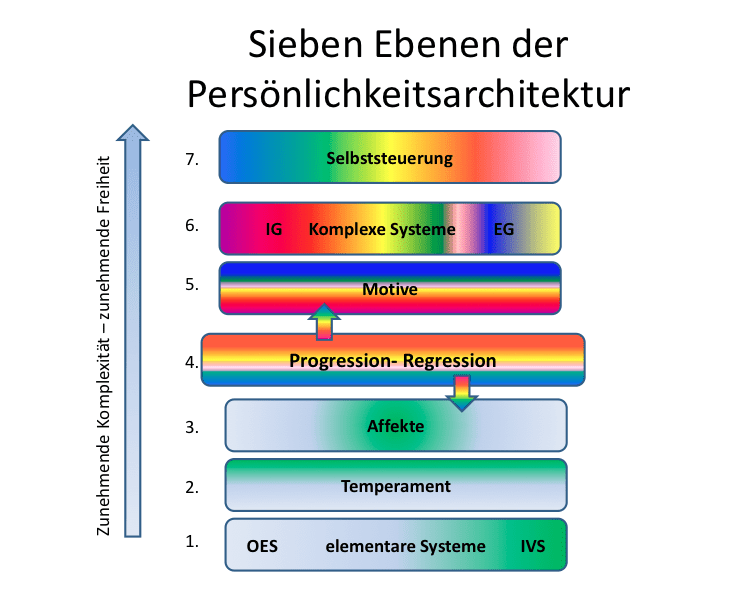
Fig.1: Legend: OES: Object recognition system; IVS: Intuitive behavioural system; IG: Intentional memory; EG: Experience memory, extension memory

In this personality architecture, it is less a matter of the individual, distinguishable levels and systems, but of their own dynamics and their flexible interaction. People differ according to the way the systems function; they can prefer or disregard the interaction of certain systems. The advantage of this model is that even people who are not personality psychologists can understand and apply its basic features without having to go into the depths of scientific psychology.

We are regarding a topological model leading from the simple (shown below in the hierarchy) to complex systems (shown above in the hierarchy) and describes a phylo- and ontogenetic line of development leading to more freedom and self-determination at the highest and, at the same time, most complex level. Self-management, which is on the 7th level of the model, is a human achievement which depends closely on the formation of the prefrontal cortex. Self-management competences are important protective factors that play a central role in the health sciences of various disciplines, e.g. nursing science, medicine and psychology, as they are precisely those competences that can minimise risk factors and verifiably lead to a faster recovery, better quality of life and better well-being (Ritz-Schulte, 2011; Ritz-Schulte & Huckebrink, 2011).

The four macro-systems of personality are located both on the elementary level and on the sixth level. We recognize two elementary systems and two intelligent systems that interact with each other on the one hand and are connected antagonistically on the other.

Motives are intelligent needs.

Julius Kuhl

PSI-Theory: The Interaction of Elementary Macro-Systems-Systems

A New Personality Theory

Julius Kuhl, University of Osnabrück

On the elementary level “at the bottom” of the personality architecture, namely on level 1, are the elementary systems. In humans, these systems are designed and shaped by early learning experiences, e.g. the emotional climate in which a person grows up. Kuhl (2001) calls these elementary systems the object recognition system (OES) and the intuitive behaviour system (IVS).

The colour blue stands for the negative affect, the colour green marks the course of action initiation.

What are these elementary systems good for? They help people to orient themselves in different environments or contexts (Kuhl, 2010, Strehlau & Kuhl, 2011, Ritz-Schulte, 2011).

The OES helps people to orient themselves in threatening environments and to move carefully. It is called an object recognition system because it enables (threatening) objects to be detached from their backgrounds and quickly recognized based on the differentiation in data and details. This is for reacting quickly to details, to discrepancies, to things that are different than expected. And the more a person pays attention to discrepancies, the more important details and discrepancies they perceive.

The IVS helps people to enjoy things that are “like paradise” or other pleasant states and to react spontaneously to external or internal stimuli (needs). It is an important source of energy, because what people experience as rewarding also activates them and thus stimulates activities. Consequently, this IVS is associated with positive affect (dopaminergic reward system), has an action-initiating effect and triggers approach behaviour.

Therefore, a different elementary system is functional for each context: If it is about enjoying being together with other people and being able to enjoy a remaining quality of life despite impairments, then it is important to be able to facilitate IVS. When it comes to coping with losses and threatening situations, it is important to pay attention to everything that is different than expected in order to be prepared for unpleasant surprises and, if necessary, to be able to protect oneself from them.

Multiple brains create multiple thoughts

Dr. Gudula Ritz

The Modulation Dynamics of Elementary Systems

Affects modulate the interaction of systems

There are great personal differences in the situational circumstances that facilitate the IVS and/or the OES. They can also be visualised as personal preferences (or individual habits) that activate a particular system. Not only personality, but also the situation is an important activator of one or the other system. In threatening situations, it is known to be useful to pay attention to discrepancies in order to be prepared for possible dangers. Then the OES is facilitated and the antagonistic system, which conveys spontaneous vitality and enjoyment, remains inhibited.

According to Kuhl (2001, 2010), the modulation dynamics of elementary systems tend to become independent once they have been facilitated and no counter-regulation takes place. This modulation dynamic could also be described as a vicious circle.

The facilitation of OES can lead to increased pain sensation, fear and further strengthening of the OES to the point of tunnel vision, which irrefutably establishes nothing more than hopelessness and constantly produces more discomfort and pain as well as dissatisfaction. People with permanently facilitated OES find ‘a fly in the ointment’ everywhere: no one can ever please them. Personal preferences to facilitate OES, which have already been mentioned above, reinforce this process. This means that someone who is very sensitive and “turns on” their OES very quickly will get into this vicious circle more easily than someone who is more robustly equipped.

A circular facilitation of IVS, on the other hand, leads to positive mood management with the risk of the overestimation of one’s own capabilities and the associated possible impulsiveness.

A person who naturally prefers IVS has a protective factor, an advantage over sensitive people who are close to their OES. If the situational influence of the elementary systems is consciously exploited, however, “miracles” can also be achieved with sensitive persons by specifically stimulating the IVS. The positive effects of sports activities and exercise and occupational therapy are well known, as they have a positive effect on mood management. Every activity has a positive effect on the mood.

In order to break through the fatal modulation dynamics of the elementary systems described above, in particular the OES, one needs not only incentives and circumstances to be active, but also further self-management competences, e.g. a good self-calming competence. In other words, self-management competences help to counteract the regressive self-dynamics of elementary systems, as it is predetermined by the modulation dynamics, by stimulating the activity of the intelligent systems, e.g. the experiential memory. For, as will be explained below, self-perception and self-awareness are reduced in the case of facilitated OES. It is, therefore, important to look more closely at the intelligent macro- systems.

The Interaction of Intelligent Macro-systems

Dynamic Processes are Crucial

Analogous to the antagonism of the elementary systems, there are two interacting intelligent systems located in the frontal cortex (level 6 of personality architecture).

Like the OES, the Intention Memory (IG) processes information hierarchically and digitally; the IG is important for goal-oriented action, for the planning and implementation of difficult and long-term intentions, for volitional facilitation and self-control. Here red is the colour for action inhibition. The four macro systems can first of all be detached from the personality architecture and viewed separately:

The Experience Memory (EG) processes information just like the elementary IVS holistically and is also called extension memory because of its enormous dimension. The colour yellow stands for sovereignty and serenity. Since the EG contains all biographically acquired and stored experiences and can therefore fall back on the complete biographical knowledge, its content is highly individual and unique. Since experience knowledge is altogether much too extensive, one cannot name it in detail as it concerns large, interconnected experience networks, whose contents one can feel rather than linguistically express exactly.

While the IG is important for goal-oriented action, the EG stores all life and work experience. In these experience networks, infinite biographical experiences are condensed and largely stored unconsciously. This experience memory is invaluable for self-calming ability and also for the practice of professional therapists and consultants. The EG is the centre of the entire professional and life experience and enables the emotional expression of one’s own state and is thus the basis for self-calming and emotional processing as well as coping. The EG is fundamental for the sense of self and can be equated with the holistically networked self-system (Kuhl 200, 2010). The self-system is important for the integration of loss-laden and painful experiences and is the supporting pillar of self-calming competence. The latter cannot be emphasized enough, because self-expression is required before self-calming. If this is possible in an accepting social environment, the person can calm down. This explains the effect of so-called mourning process, in which loss-laden experiences are told over and over again, before, most cases, calming gradually sets in (not always – this also depends on other factors).

Under the influence of pain and anxiety, the access to the EG (self-system) is inhibited and the access to the OES is facilitated according to the modulation dynamics of the personal systems. People differ greatly in their ability to counteract the system dynamics despite difficult conditions, in threatening situations or under stress. If they succeed in doing this well, this is referred to as a very pronounced self-calming competence. The affective state of the facilitated self is that of sovereign serenity or, expressed functionally analytically, of the down-regulated negative affect. People who have less self-calming competence or who are exposed to extreme pain, strain or threats need social support in order to maintain access to the self-system and thus to their self-calming competence despite these adverse conditions.

There are many factors that can support and facilitate access to the self-system. These include social resources such as high-quality relationships in which the quality characteristics of personal presence, authenticity, appreciation and empathy are implemented. In addition to resource-oriented relationship structures, there are other factors that can support self-access, for example artistic or musical self-expression. The creative authentic expression of the self is, as already mentioned above, the first important stage of self-calming. The self-system is strongly linked to bodily experiences. Physical perception exercises can also improve the sense of self.

Interesting for change processes are the level of motives, the unconscious power sources of a person and their self-management competences that allow a person freedom of will and action (Ritz-Schulte & Huckebrink).

Sources

Here you will find a selection of current scientific publications and basic information especially on the functional-analytical test and training instruments.

Allgemeine Auswahl

  • Das Manual zu den TOP-Testsystemen: Kuhl, J. & Alsleben, P. (2009). Manual für die trainingsbegleitende Osnabrücker Persönlichkeitsdiagnostik. Hrsg. IMPART. Münster: sonderpunkt-Verlag.
  • Alsleben, P. (2007). Das Bedürfnis nach Freiheit. Selbstintegration als viertes Basismotiv. Diplomarbeit: Universität Osnabrück.
  • Baumann, N., Kaschel, R. & Kuhl, J. (2005). Striving for unwanted goals: Stress-dependent discrepancies between explicit and implicit achievement motives reduce subjective well-being and increase psychosomatic symptoms. Journal of Personality and Social Psychology, 89(5), 781-799.
  • Baumann, N., Kaschel, R. & Kuhl, J. (2007). Affect sensitivity and affect regulation in dealing with positive and negative affect. Journal of Research in Personality, 41, 239-248.
  • Blasczyk-Schiep, S. (2003). Selbststeuerung und Suizidalität: Affektregulation, polysemantische Verarbeitung und Sinnerleben. Unveröffentlichte Dissertation: Universität Osnabrück.
  • Kaschel, R.& Kuhl, J. (2003). Motivational counseling in an extended functional context: Personality systems interaction theory and assessment. In W.M. Cox & E. Klinger (Eds.), Motivational counseling: Motivating people for change.Sussex: Wiley (deutsche Übersetzung verfügbar).
  • Künne, T. (2008). Umsetzungsformen des Leistungsmotivs und Schulleistung: Eine empirische Untersuchung zur gruppenspezifischen Begabungsförderung. Saarbrücken: Verlag Dr. Müller.
  • Kuhl, J. , Scheffer, D. Mikoleit, B. & Strehlau, A. (2010). Persönlichkeit und Motivation im Unternehmen. Stuttgart: Kohlhammer.
  • Kuhl, J. (2001). Motivation und Persönlichkeit: Interaktionen psychischer Systeme. Göttingen: Hogrefe.
  • Kuhl, J. (2004). Entfremdung als Krankheitsursache: Selbstregulation von Affekten und integrative Kompetenz. Psychologische Rundschau, 55, 1-11.
  • Kuhl,J. (2010). Lehrbuch der Persönlichkeitspsychologie. Göttingen: Hogrefe.
  • Martens, J. U. & Kuhl, J. (2004). Die Kunst der Selbstmotivierung: Neue Erkenntnisse der Motivations-forschung praktisch nutzen. Stuttgart: Kohlhammer.
  • Ritz-Schulte (2011). Persönlichkeitsorientierte Beratung. Von Lebenskunst und Selbstentwicklung. In V. Begemann & S. Rietmann (Hrsg.). Soziale Praxis gestalten. Orientierungen für ein gelingendes Handeln. Stuttgart: Kohlhammer.
  • Ritz-Schulte (2011). Autor des eigenen Lebens werden. Anleitung zur Selbstentwicklung. Mit einem Beitrag zum autobiografischen Lesen und Schreiben von Alfons Huckebrink. Stuttgart: Kohlhammer.
  • Ritz-Schulte, G. (2001). Problembearbeitung und Beziehungsgestaltung bei Persönlichkeitsstörungen. Göttingen: Hogrefe.
  • Ritz-Schulte, G., Schmidt, P. & Kuhl, J. (2008). Persönlichkeitsorientierte Psychotherapie. Göttingen: Hogrefe.
  • Ritz-Schulte (in Vorber.). Persönlichkeitsorientierte Beratung.
  • Scheffer, D. & Kuhl, J. (2006). Erfolgreich motivieren. Göttingen: Hogrefe.
  • Strehlau, A. (2008). Life Balance und Selbststeuerungskompetenzen. Eine Untersuchung mit Implikationen für Coaching und Beratung. Saarbrücken: Verlag Dr. Müller.
  • Alsleben, P. (2007). Das Bedürfnis nach Freiheit. Selbstintegration als viertes Basismotiv. Saarbrücken: VDM-Verlag.
  • Baumann, N., & Kuhl, J. (2003). Self-Infiltration: Confusing assigned tasks as self-selected in memory. Personality and Social Psychology Bulletin, 29, 487-497.
  • Baumann, N., & Kuhl, J. (2005). How to resist temptation: The effects of external control versus autonomy support on self-regulatory dynamics. Journal of Personality, 73, 443-470.
  • Baumann, N., Kaschel, R. & Kuhl, J. (2007). Affect sensitivity and affect regulation in dealing with positive and negative affect. Journal of Research in Personality, 41, 239-248.
  • Baumann, N., Kaschel, R. & Kuhl, J. (2005). Striving for unwanted goals: Stress-dependent discrepancies between explicit and implicit achievement motives reduce subjective well-being and increase psychosomatic symptoms. Journal of Personality and Social Psychology, 89(5), 781-799.
  • Biebrich, R., & Kuhl, J. (2002b). Selbststeuerung und affektive Sensibilität: persönlich­keits­spezi­fi­sche Antezedenzien der Depressivität. [Self-regulation and affective sensitivity: Personality-related antecedents of depression]. Zeitschrift für Psychologie, 210 (2), 74-86.
  • Blasczyk-Schiep, S. (2003). Selbststeuerung und Suizidalität: Affektregulation, polysemantische Verarbeitung und Sinnerleben . Unveröffentlichte Dissertation. Universität Osnabrück.
  • Bolte, A., Goschke, T., & Kuhl, J. (2003). Emotion and intuition: Effects of positive and negative mood on implicit judgments of semantic coherence. Psychological Science, 14, 416-421.
  • Hartmann, K., & Kuhl, J. (2004). Der Wille in der Verhaltenstherapie [The will in behavior therapy]. In & H. Petzold & J. Sieper (Eds.), Der Wille in der Psychotherapie (pp. 7-44). Göttingen: Vandenhoeck & Ruprecht.
  • Kaschel, R.& Kuhl, J. (2003). Motivational counseling in an extended functional context: Personality systems interaction theory and assessment. In W.M. Cox &E. Klinger (Eds.), Motivational counseling: Motivating people for change.Sussex: Wiley (deutsche Übersetzung verfügbar).
  • Kazén, M., & Kuhl, J. (2005). Intention Memory and Achievement Motivation: Volitional Facilitation and Inhibition as a Function of Affective Contents of Need-Related Stimuli. Journal of Personality and Social Psychology, 89, 426-448.
  • Keller, H. (1997). Entwicklungspsychopathologie: Das Entstehen von Verhaltensproblemen in der frühesten Kindheit. In H. Keller (Hrsg.), Handbuch der Kleinkindforschung (2. überarb. Aufl., S. 625-642). Bern: Huber.
  • Kraska, K. (1993). Effizienz und Flexibilität: Entwicklung und Evaluation differentieller Interventionspro­gram­me zur Förderung der Selbstregulation im Grundschulalter. Unveröffentlichte Dissertation: Universität Os­na­brück.
  • Kuhl, J. (2000a). A functional-design approach to motivation and self-regulation: The Dynamics of Personality Systems Interactions. In M. Boekaerts, P. R. Pintrich & M. Zeidner (Eds.), Self-regulation: Directions and challenges for future research. Academic Press.
  • Kuhl, J. (2000b). The volitional basis of personality systems interaction theory: Applications in learning and treatment contexts. International Journal of Educational Research, 33, 665-703.
  • Kuhl, J. (2001). Motivation und Persönlichkeit: Interaktionen psychischer Systeme. Göttingen: Hogrefe.
  • Kuhl, J. (2001b). Testgestützte Therapiegestaltung und Evaluation: Soziale Motive, affektiv-kognitive Stile und Selbststeuerungsfunktionen. In J.-H. Mauthe (Hrsg.), Affekt und Kognition (S. 72-95). Sternenfels: Verlag Wissenschaft & Praxis.
  • Kuhl, J. (2001). Psychologie der Persönlichkeit. Göttingen: Hogrefe.
  • Kuhl, J. (2004). Entfremdung als Krankheitsursache: Selbstregulation von Affekten und integrative Kompetenz. Psychologische Rundschau, 55, 1-11.
  • Kuhl, J., Baumann, N., & Kazén, M. (2007). What goals make good grades and why? Motivation, intelligence, and teachers assessment of giftedness. Academic Exchange Quarterly, 11.
  • Kuhl, J., Kazén, M., & Koole, S. L. (2006). Putting self-regulation theory into practice: A users manual. Applied Psychology: An International Review, 55, 408-418.
  • Kuhl, J., & Keller, H. (2008). Affect-Regulation, Self-development and Parenting: A Functional-Design Approach to Cross-Cultural Differences. In R.M. Sorrentino & S. Yamaguchi (Eds.), Handbook of Motivation and Cognition Across Cultures. Academic Press.
  • Kuhl, J., & Koole, S.L. (2004). Workings of the will: A functional approach. In J. Greenberg, S. L. Koole, & T. Pyszczynski (Eds.), Handbook of experimental existential psychology (pp. 411-430). New York: Guilford.
  • Kuhl, J., & Scheffer, D. (2008). Potenzialdiagnostik der Mitarbeitermotivation [Job motivation and assessment]. Stuttgart: Kohlhammer.
  • Kuhl, J., Scheffer, D., Mikoleit, B. & Strehlau, A. (2009). Diagnostik von Persönlichkeit und Förderung von Motivation: Anwendung der PSI-Theorie bei der Personalentwicklung. Stuttgart: Kohlhammer.
  • Kuhl, J., & Völker, S. (1998). Entwicklung und Persönlichkeit. In H. Keller (Hrsg.). Lehrbuch Entwicklungspsychologie (S. 207-240). Göttingen: Hans Huber Verlag.
  • Marten, J.-U., & Kuhl, J. (2009). Die Kunst der Selbstmotivierung. Stuttgart: Kohlhammer
  • Quirin, M., & Kuhl, J. (2009). Theorie der Persönlichkeits-System-Interaktionen [Theory of Personality Systems Interactions (PSI)]. In V. Brandstätter-Morawietz & J. H. Otto (Eds.), Handbuch der Allgemeinen Psychologie: Motivation und Emotion (pp. 157-162). Göttingen: Hogrefe.
  • Raadts, S. (2009). Theorie der Handlungsschnelligkeit im Sportspiel Fußball. Unveröffentlichte Dissertation. Universität Osnabrück.
  • Ritz-Schulte, G. (2004). Problembearbeitung und Beziehungsgestaltung bei Persönlichkeitsstörungen. Göttingen: Hogrefe.
  • Ritz-Schulte, G., & Kuhl, J. (2004). Die Förderung des Selbstzugangs in der Psychotherapie: therapiebegleitende Funktionsdiagnostik in der Langzeitkatamnese psychiatrischer Patienten. In U. Sprick & U. Trenckmann (Hrsg.), Wenn das Selbst zum Feind wird- Autoaggression, Suizidalität und selbstschädigendes Verhalten (S. 82-92). Dortmund: psychogen-Verlag. Universität Osnabrück.
  • Ritz-Schulte, G., Schmidt, P. & Kuhl, J. (2008). Persönlichkeitsorientierte Psychotherapie. Göttingen: Hogrefe.
  • Ritz-Schulte, G (in Vorber.). Persönlichkeitsorientierte Beratung.
  • Ritz-Schulte, G (in Vorber.). Personality oriented Counseling.
  • Scheffer, D., & Kuhl, J. (2006). Erfolgreich Motivieren. Göttingen: Hogrefe.
  • Strehlau, A. (2008). Life Balance und Selbststeuerungskompetenzen. Eine Untersuchung mit Implikationen für Coaching und Beratung. Saarbrücken: Verlag Dr. Müller.
  • Beckmann, J., & Kuhl, J. (1984). Altering information to gain action control: Functional aspects of human information processing in decision-making. Journal of Research in Personality, 18, 223-279.
  • Brunstein, J.C. (2001). Persönliche Ziele und Handlungs- versus Lageorientierung: Wer bindet sich an realistische und bedürfniskongruente Ziele? Zeitschrift für Differentielle und Diagnostische Psychologie, 22, 1-12.
  • Dawson, M.E., & Schell, A.M. (1982). Electrodermal responses to attended and nonattended significant stimuli during dichotic listening. Journal of Experimental Psychology: Human Perception and Performance, 8, 315-324.
  • Eysenck, H.J. (1967). The biological basis of personality. Springfield, IL: Charles C. Thomas.
  • Eysenck, H.J. (1967). The biological basis of personality. Springfield, IL: Charles C. Thomas.
  • Gupta, B.S., & Nagpal, M. (1978). Impulsivity/sociability and reinforcement in verbal operant conditioning. British Journal of Psychology, 69, 203-206.
  • Janke, W., & Debus, G. (1978). Die Eigenschaftswörterliste (EWL) – Ein Verfahren zur Erfassung der Befindlichkeit, Göttingen, Hogrefe.
  • Kaschel, R., & Kuhl, J. (2004). Motivational counseling in an extended functional context: Personality Systems Interaction Theory and Assessment. In W.M. Cox & E. Klinger (Eds), Handbook of motivational counseling: Motivating People for Change. Sussex: Wiley.
  • Koole, S.L., & Jostmann, N. (2004). Getting a grip on your feelings: Effects of action orientation and social demand on intuitive affect regulation. Manuscript submitted for publication. Free University of Amsterdam.
  • Krohne, H. W., Egloff, B., Kohlmann, C. W., & Tausch, A. (1996). Untersuchungen mit einer deutschen Version der Positive and Negative Affect Schedule (PANAS). Diagnostica, 42, 139-156.
  • Kuhl, J. (1983). Motivation, Konflikt und Handlungskontrolle. Heidelberg: Springer-Verlag.
  • Kuhl, J. (1998). Wille und Persönlichkeit: Von der Funktionsanalyse zur Aktivierungsdynamik psychischer Systeme. Psychologische Rundschau, 49, 61-77.
  • Lang, P.J. (1995). The emotion probe: Studies of motivation and attention. American Psychologist, 50, 372-385.
  • Pribram, K.H., & McGuiness, D. (1975). Arousal, activation, and effort in the control of attention. Psychological Review, 82, 116-149.
  • Smokler, I.A., & Shevrin, H. (1979). Cerebral lateralization and personality style. Archives of General Psychiatry, 36, 949-954.Watson, D. & Tellegen, A. (1985). Toward a consensual structure of mood. Psychological Bulletin, 98, 219-235.
  • Watson, D., & Tellegen, A. (1985). Toward a consensual structure of mood. Psychological Bulletin, 98, 219-235.
  • Watson, D., Clark, L. A., & Tellegen, A. (1988). Development and validation of brief measures of positive and negative affect: The PANAS scales. Journal of Personality and Social Psychology, 54, 1063-1070.
  • Fritsch, F. (2004). Rezeption – Reproduktion – Produktion: Versuch der Konstruktion einer synergetischen Lernfelddidaktik im Musikunterricht. Unveröffentlichte Diplom-Arbeit. Universität Osnabrück.
  • Quirin, M., Kazén, M., & Kuhl, J. (in press). When nonsense sounds happy or sad: The implicit positive and negative affect test (IPANAT). Journal of Personality and Social Psychology.
  • Quirin, M., Kazén, M., & Kuhl, J. (2009). Circumventing self-reflection when measuring emotions: The Implicit Positive and Negative Affect Test (IPANAT). In L. B. Palcroft & M. V. Lopez (Eds.), Personality assessment: New research. Hauppauge, NY: Nova Science Publishers.
  • Quirin, M., Kazén, M., Rohrmann, S., & Kuhl, J. (2009). Implicit but not explicit affectivity predicts reactive and circadian and reactive cortisol secretion: Using the implicit positive and negative affect test. Journal of Personality, 77, 401-425
  • Berthold, D. (2009). Das diagnostische Potential der Persönlichkeitsinventare JTCI 12 18 R und PSSI im theoretischen und praktischen Vergleich. Unveröffentlichte Diplomarbeit. Universität Frankfurt.
  • Fiedler, P. (1994). Persönlichkeitsstörungen. Beltz: Weinheim.
  • Fiedler, P. (1994). Persönlichkeitsstörungen. Beltz: Weinheim.
  • Koetz, E. (2006). Persönlichkeitsstile und unternehmerischer Erfolg von Existenzgründern. Unveröffentlichte Dissertation. Universität Osnabrück.
  • Kuhl, J. (1999). Das STAR-Modell der Persönlichkeitsstörungen: Affektmodulierte Inter­aktionen kognitiver Makrosysteme. Persönlichkeitsstörungen Theorie und Therapie, 1999, 3 (special edition), 84-90.
  • Kuhl, J. (2001). Motivation und Persönlichkeit: Interaktionen psychischer Systeme (S. 929-945). Göttingen: Hogrefe.
  • Kuhl, J. (2001). Testgestützte Therapiegestaltung und Evaluation: Soziale Motive, affektiv-kognitive Stile und Selbststeuerungsfunktionen. In J.-H. Mauthe (Hrsg.), Affekt und Kognition (S. 72-95). Sternenfels: Verlag Wissenschaft & Praxis.
  • Kuhl, J., & Kazén, M. (2009). Das Persönlichkeits-Stil-und-Störungs-Inventar (PSSI): Handan­weis­ung. Göttingen: Hogrefe.
  • Baumann, N., Kaschel, R., & Kuhl, J. (2007). Affect sensitivity and affect regulation in dealing with positive and negative affect. Journal of Research in Personality, 41, 239-248.
  • Baumann, N., Kaschel, R., & Kuhl, J. (2005). Affect regulation and motive-incongruent achievement orientation: Antecedents of subjective well-being and symptom formation. Journal of Personality and Social Psychology.
  • Baumann, N., & Kuhl, J. (2005). Selbstregulation und Selbstkontrolle.[Self-regulation and self-control] In H. Weber, T. Rammsayer (Eds.), Handbuch der Persönlichkeitspsychologie und Differentiellen Psychologie (pp. 362-373). Göttingen: Hogrefe.
  • Biebrich, R., & Kuhl, J. (2002a). Neurotizismus und Kreativität: Strukturelle Unterschiede in der Beeinflussung kreativer Leistung. [Neuroticism and creativity: Structural differences in the determination of creative performance]. Zeitschrift für Differentielle und Diagnostische Psy­cho­logie, 23, 171-190.
  • Biebrich, R., & Kuhl, J. (2002b). Selbststeuerung und affektive Sensibilität: persönlich­keits­spezi­fi­sche Antezedenzien der Depressivität. [Self-regulation and affective sensitivity: Personality-related antecedents of depression]. Zeitschrift für Psychologie, 210 (2), 74-86.
  • Cordero, S. (2005). Persönlichkeitsstile und psychische Erkrankung (Achse I und II): Zur Rolle von Bedürfnisfrustration, Stress, Affekten und Selbststeuerungsdefiziten:. Unveröffentlichte Dissertation. Universität Osnabrück.
  • Fröhlich, S., & Kuhl, J. (2003). Das Selbststeuerungsinventar: Dekomponierung volitionaler Funktionen. In J. Stiensmeier-Pelster & F. Rheinberg (Eds.), Tests und Trends: Diagnostik von Motivation und Selbstkonzept (Vol. 2, pp. 221-257). Göttingen: Hogrefe.
  • Fuhrmann, A., & Kuhl, J. (1998). Maintaining a healthy diet: Effects of personality and self-reward versus self-punishment on commitment to and enactment of self-chosen and assig­ned goals. Psychology and Health, 13, 651-686.
  • Kuhl, J. (2004). Was bedeutet Selbststeuerung und wie kann man sie entwickeln? [What is self-regulation and how is it developed?] Personalführung, 37 (4), 30-39.
  • Kuhl, J., & Fuhrmann, A. (1998). Decomposing self-regulation and self-control: The volitional components inventory. In J. Heckhausen & C. Dweck (Eds.), Lifespan perspectives on moti­va­tion and control (pp. 15-49). Hillsdale, NJ: Erlbaum.
  • Kuhl, J., & Kaschel, R. (2004). Entfremdung als Krankheitsursache: Selbstregulation von Affekten und integrative Kompetenz. [Alienation as a determinant of illness: Self-regulation of affect and integrative competence]. Psychologische Rundschau, 55, 61-71.
  • Schroer, B.M. (2001). Zielaktivierung und Zielklärung (ZAK): Evaluation einer gruppentherapeutischen Kurzintervention in der Entzugsbehandlung alkoholabhängiger Menschen (unveröffentlichte Dissertation, Münster).
  • Wehowsky, A. (2004). Zum Kompetenzkompass der Selbststeuerung. In P. Geißler (Hrsg.), Was ist Selbstregulation? Eine Standortbestimmung, Gießen: Psychosozial Verlag, S. 153 177.
  • Koole, S., & Jostmann, N. (2004). Getting a grip on your feelings: Effects of action orientation and social demand on intuitive affect regulation. Journal of Personality and Social Psychology, 87, 974-990.
  • Kuhl, J. (1983). Motivation Konflikt und Handlungskontrolle. Berlin: Springer.
  • Kuhl, J. (1994). Action versus state orientation: Psychometric properties of the Action Control Scale (ACS-90). In J. Kuhl & J. Beckmann (Eds.), Volition and personality: Action versus state orientation (pp. 47-56). Göttingen: Hogrefe.
  • Kuhl, J., & Beckmann, J. (1994). Volition and personality: Action versus state orientation. Göttingen: Hogrefe.
  • Kuhl, J., & Kazén, M. (2003). Handlungs- und Lageorientierung: Wie lernt man, seine Gefühle zu steuern [Action and state orientation: How does one learn to regulate one’s feelings]? In J. Stiensmeier-Pelster & F. Rheinberg (Eds.), Tests und Trends: Diagnostik von Motivation und Selbstkonzept (Vol. 2, pp. 201-219). Göttingen: Hogrefe.
  • Norman, P., Sheeran, P., & Orbell, S. (2003). Does State versus Action-Orientation Moderate the Intention-Behavior Relationship, Jourmal of Applied Social Psychology, 33, 3, 536-553.
  • Palfai, T.P. (2002). Action-state orientation and the self-regulation of eating behavior. Eating behaviors, 3(3), 249-59.
  • Quirin, M., & Kuhl, J. (2009). Handlungskontrolltheorie [Theory of Action Control]. In V. Brandstätter-Morawietz & J. H. Otto (Eds.), Handbuch der Allgemeinen Psychologie: Motivation und Emotion (pp. 163-173). Göttingen: Hogrefe.
  • Atkinson, J.W. (1958). Motives in fantasy, action, and society. Princeton, NJ: Van Nostrand.
  • Baumann, N., Kaschel, R., & Kuhl, J. (2007). Affect sensitivity and affect regulation in dealing with positive and negative affect. Journal of Research in Personality, 41, 239-248.
  • Baumann, N., Kaschel, R., & Kuhl, J. (2005). Affect regulation and motive-incongruent achievement orientation: Antecedents of subjective well-being and symptom formation. Journal of Personality and Social Psychology.
  • Kuhl, J. (2001). Motivation und Persönlichkeit: Interaktionen psychischer Systeme (S. 609ff.). Göttigen: Hogrefe.
  • Alsleben, P. (2008). Das Bedürfnis nach Freiheit. Selbstintegration als viertes Basismotiv. Saarbrücken: VDM-Verlag.
  • Alsleben, P., & Kuhl, J. (2009) Touching the Essence: Using Implicit Motives as Personal Resources in Counseling. In W. M. Cox & E. Klinger (Eds), Handbook of Motivational Counseling. Concepts, Approaches, and Assessment (2nd ed.). Chichester, United Kingdom: Wiley.
  • Baumann, N., Kaschel, R., & Kuhl, J. (2005). Striving for unwanted goals: Stress-dependent discrepancies between explicit and implicit achievement motives reduce subjective well-being and increase psychosomatic symptoms. Journal of Personality and Social Psychology, 89, 781-799.
  • Heckhausen, J., & Tomasik, M.J. (2002). Get an Apprenticeship before School is Out: How German Adolescents Adjust Vocational Aspirations When Getting Close to a Developmental Deadline. Journal of Vocational Behavior, 60, 199-219.
  • Kuhl, J., & Kazén, M. (2008). Motivation, affect, and Hemispheric Asymmetry: Power versus Affiliation. Journal of Personality and Social Psychology, 95, 456-469.
  • Kuhl, J., & Scheffer, D. (1999). Der operante Multi-Motiv-Test (OMT): Manual. Universität Osnabrück.
  • Kuhl, J., Scheffer, D., & Eichstaedt, J. (2003). Der Operante Motiv-Test (OMT): Ein neuer Ansatz zur Messung impliziter Motive [The Operant Motive Test (OMT): a new approach to measuring implicit motives]. In J. Stiensmeier-Pelster & F. Rheinberg (Eds.), Tests und Trends: Diagnostik von Motivation und Selbstkonzept (Band 2, pp. 129-149). Göttingen: Hogrefe.
  • McClelland, D.C., & Boyatzis, R.E. (1982). Leadership motive pattern and long-term success in management. Journal of Applied Psychology, 67, 737-743.
  • Murray, H.A. (1943). Thematic Apperceptive Test Manual. Cambridge: Harvard University Press.
  • Scheffer, D. (2001). Entwicklungsbedingungen impliziter Motive: Bindung, Leistung & Macht. Dissertation veröffentlicht unter http://elib.ub.uni-osnabrueck.de/ publications/diss/E-Diss150_thesis.pdf.
  • Scheffer, D. (2004). Messung impliziter Motive. Göttingen: Hogrefe.
  • Scheffer, D., Kuhl, J., & Eichstaedt, J. (2003). Der Operante Motiv-Test (OMT): Inhaltsklassen, Auswertung, psychometrische Kennwerte und Validierung. In J. Stiensmeier-Pelster & F. Rheinberg (Eds.), Tests und Trends: Diagnostik von Motivation und Selbstkonzept (Band 2, pp. 151-167). Göttingen: Hogrefe.
  • Weber, I. (2009). Das Bedürfnis nach Selbstintegration als Prädiktor für Persönlichkeitsstörungen. Unveröffentlichte Diplomarbeit Universität Koblenz-Landau.

This post is also available in: German